

F-150 PowerBoost Explained: Hybrid Truck Capability, Towing, and Mobile Power
The Ford F-150 PowerBoost gives full-size truck shoppers a different kind of hybrid advantage. It is not just about stretching a tank of gas. It is about strong low-end power, serious towing capability, and available built-in electricity that can help run tools, charge gear, and support work or recreation when an outlet is nowhere nearby.
For drivers around Tilton, Northfield, Winnisquam, Franklin, and the Lakes Region, that mix matters. A truck may need to handle commuting on US-3/NH-11 during the week, a trailer on Saturday, a supply run to Tanger Outlets or Belknap Marketplace, and a cabin, campsite, or home project before the weekend is over. The F-150 PowerBoost was built for shoppers who want one truck that can do more than one job well.
F-150 PowerBoost Quick Facts
The Ford F-150 PowerBoost is the full hybrid version of the F-150, pairing gas-engine strength with electric-motor assist in a traditional full-size pickup package.
- Powertrain: 3.5L PowerBoost Full Hybrid V6
- Transmission: 10-speed automatic
- Horsepower and torque: Ford’s 2026 towing guide lists 420 horsepower and 570 lb-ft of torque¹
- Maximum towing: Up to 11,600 lbs. when properly equipped¹
- Maximum payload: Up to 1,740 lbs. when properly configured¹
- EPA fuel economy: 22 city / 24 highway / 23 combined MPG for the 2026 Ford F-150 Pickup 4WD HEV²
- Mobile power: Available 7.2 kW Pro Power Onboard output³
- Charging: No plug-in charging required
The key takeaway is simple: PowerBoost is a hybrid truck for people who still need a truck. It keeps the F-150’s work-ready attitude while adding hybrid efficiency and available mobile power.
Shop F-150 PowerBoost Shop All F-150
What Is the Ford F-150 PowerBoost?
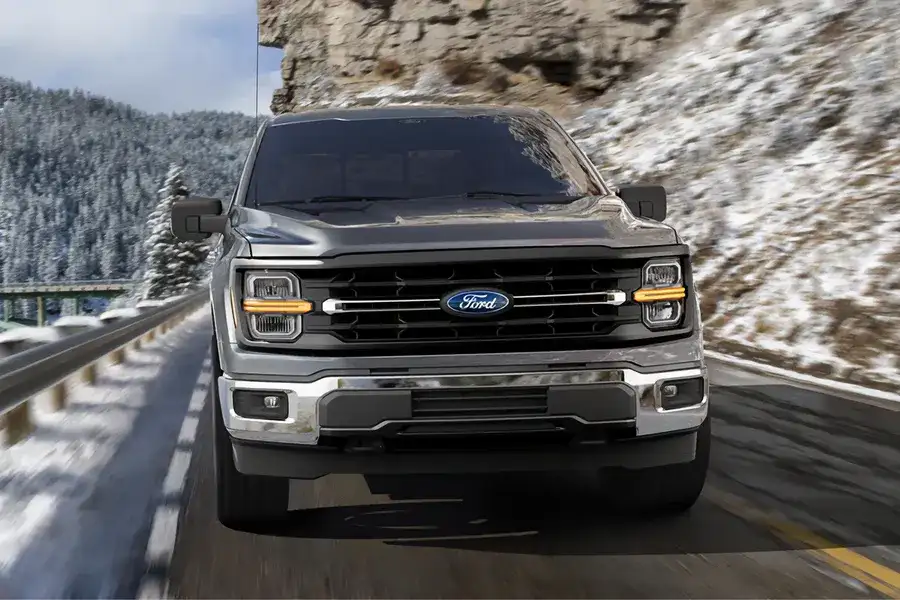
The F-150 PowerBoost is a full hybrid pickup, not a plug-in hybrid and not an EV. You do not need a home charger, public charger, or special charging routine. The hybrid system works automatically as you drive, using electric assistance, regenerative braking, and gas-engine power to support performance and efficiency.
That makes PowerBoost easy to understand once you get behind the wheel. It drives like an F-150, hauls like an F-150, and tows like an F-150, but with the added benefit of hybrid assist. Around town, the system can help smooth out stop-and-go driving. On the highway, it settles into the familiar confidence of a full-size Ford truck. When the job gets heavier, the gas engine and electric motor work together to deliver the torque that makes PowerBoost feel so capable.
For shoppers who like the idea of hybrid efficiency but do not want to change their daily habits, that is the appeal.
PowerBoost Capability: The Hybrid Advantage Is Torque, Not Just MPG
The best reason to consider the F-150 PowerBoost is balance. It gives you the efficiency story shoppers expect from a hybrid, but the bigger advantage may be how usable the power feels in everyday truck situations.
Torque is what helps a truck move weight, accelerate with confidence, and feel less strained when the bed is loaded or a trailer is attached. Ford’s 2026 towing guide lists the 3.5L PowerBoost Full Hybrid V6 at 570 lb-ft of torque, which gives it the kind of low-end strength truck buyers notice in real driving.¹
That can make a difference when merging onto I-93, climbing grades with gear in the bed, hauling materials for a home project, or towing toward a weekend spot near the Winnipesaukee River Trail or Franklin Falls Dam. The PowerBoost does not ask you to choose between “hybrid” and “useful.” It gives you both in one F-150 configuration.
How Much Can the F-150 PowerBoost Tow?

The 2026 Ford F-150 PowerBoost can tow up to 11,600 pounds when properly equipped.¹ That number gives it the muscle for many campers, boats, utility trailers, equipment trailers, and recreational setups, but the exact rating depends on the specific truck.
Cab configuration, drivetrain, wheelbase, axle ratio, towing equipment, cargo, passengers, accessories, and payload all affect real towing capacity. Ford also notes that maximum towing, payload, horsepower, and torque are independent attributes and may not be achieved at the same time.¹
That matters because a trailer is not the only weight your truck is managing. Trailer tongue weight, passengers, tools, coolers, firewood, bikes, and weekend gear all count toward the truck’s limits. Before choosing an F-150 PowerBoost for towing, it is worth reviewing the truck’s doorjamb payload label and the exact trailering equipment on the vehicle.
For many New Hampshire drivers, the PowerBoost is a strong match for:
- Utility trailers for dump runs, yard cleanup, and home projects
- Small and midsize campers
- Boats and lake gear
- Landscaping and equipment trailers
- Work trailers for contractors and service businesses
- Weekend hauling around Tilton, Belmont, Winnisquam, and Franklin
The team at Nucar Ford of Tilton can help compare configurations so shoppers understand the difference between the maximum published rating and the rating of the specific truck they are considering.
What Pro Power Onboard Can Do
Pro Power Onboard is one of the features that makes the F-150 PowerBoost feel different from a typical full-size truck. With available 7.2 kW output, the PowerBoost can provide electricity from the truck itself, helping reduce the need to bring a separate generator for certain jobs and outings.³
That can be useful for:
- Running compatible power tools at a jobsite
- Charging batteries for tools, phones, laptops, or outdoor gear
- Powering lights during evening work
- Supporting equipment during a project away from a building
- Helping with campsite or tailgate power needs
- Running select home essentials during an outage when properly equipped
Think about a property project off Depot Street/NH Route 140, a day of work where power is not convenient, or a weekend setup where you want to keep gear charged without packing extra equipment. Pro Power Onboard turns the truck into part of the plan, not just the way you get there.
What Pro Power Onboard Cannot Do
Pro Power Onboard is powerful, but it is not unlimited. The available power depends on the combined draw of everything plugged in at the same time. Some tools and appliances need more startup power than their running wattage, and Ford notes that power may be limited in Drive mode or certain temperature conditions.³
It is also important to understand the home-backup difference. Pro Power Onboard can help power select essentials when used correctly, but essential home backup requires the F-150 Hybrid PowerBoost with 7.2 kW Pro Power Onboard and a GenerLink transfer switch sold separately.³ It is not the same as plugging the truck into a house without the right equipment.
That clarity is useful for shoppers. PowerBoost can be a major convenience for contractors, homeowners, campers, and storm-season planning, but the best experience comes from knowing what you want to power and choosing the right setup from the start.
F-150 PowerBoost MPG: What to Expect
The 2026 Ford F-150 Pickup 4WD HEV is EPA-rated at 22 city MPG, 24 highway MPG, and 23 combined MPG.² For a full-size 4WD pickup, that makes PowerBoost an appealing choice for drivers who want capability and better efficiency than they may expect from a traditional truck routine.
Real-world MPG will vary. Towing, payload, cold weather, highway speed, terrain, tire choice, idle time, and driving habits can all affect fuel economy. A PowerBoost used for commuting between Tilton and Concord will not return the same results as one towing a camper north for the weekend or hauling equipment every day.
That is why the PowerBoost should not be judged by MPG alone. Its value comes from the whole package: hybrid efficiency, torque-rich performance, available 7.2 kW mobile power, and the ability to keep doing truck work.
What Truck Shoppers Usually Want to Know About PowerBoost
Many F-150 PowerBoost questions come down to everyday use, not spec-sheet bragging rights. Shoppers want to know how the hybrid system behaves in winter, what happens to MPG while towing, whether Pro Power Onboard is truly useful, and whether a hybrid truck feels complicated.
The practical answer is that PowerBoost works best when shoppers match it to the right routine. It can be a great fit for drivers who split time between commuting, towing, projects, errands, and recreation. It may be less compelling for someone who only wants the lowest entry price or who regularly tows at the upper edge of the F-150’s ratings.
PowerBoost also answers a common concern about hybrid trucks: capability. It is not a small efficiency-first vehicle wearing a pickup badge. It is an F-150 with a hybrid powertrain, which means shoppers still need to think like truck shoppers. Payload, towing equipment, axle ratio, cab size, bed length, and intended use all matter.
F-150 PowerBoost vs. Gas F-150: Which One Makes Sense?
The F-150 PowerBoost makes the most sense if you want hybrid efficiency, strong torque, towing capability, and available high-output Pro Power Onboard in one truck. It is especially appealing for drivers who use their pickup for more than one role.
Choose the F-150 PowerBoost if you care most about:
- Hybrid efficiency in a full-size truck
- Strong torque for towing and daily driving
- Available 7.2 kW Pro Power Onboard
- A truck that can support work, home projects, and recreation
- Reducing the need for a separate generator in certain situations
A gas F-150 may still be the better fit if you want a specific trim, a different engine character, a lower starting price depending on configuration, or maximum towing from another F-150 setup. Ford offers multiple F-150 powertrains because truck buyers do not all use their trucks the same way.
The best move is to compare the PowerBoost against other F-150 options side by side. A test drive can reveal a lot: how the hybrid system feels, how the cabin fits your family or crew, how the bed works for your gear, and whether Pro Power Onboard solves real problems for your routine.
Who Should Consider an F-150 PowerBoost Around Tilton?
The F-150 PowerBoost is a strong fit for drivers who ask a lot from one truck. It works for commuters who still need weekend towing, contractors who value mobile power, homeowners who handle projects year-round, and families who want a comfortable full-size pickup with real capability.
It fits the rhythm of New Hampshire driving because the job changes by season. Spring can mean mulch, cleanup, tools, and dump runs. Summer can bring boats, bikes, camping gear, and lake weekends. Fall can mean property projects, firewood, and trailer duty. Winter adds cold starts, slippery roads, storm prep, and the value of having a truck that feels ready when conditions change.
The PowerBoost is not trying to turn the F-150 into something softer. It gives the F-150 another layer of usefulness.
Shop the Ford F-150 PowerBoost at Nucar Ford of Tilton
Nucar Ford of Tilton helps truck shoppers compare F-150 engines, trims, towing equipment, payload ratings, bed sizes, cab configurations, and available technology based on how the truck will actually be used. That is especially important with the F-150 PowerBoost because the right configuration can make a real difference in towing confidence, workday convenience, and long-term satisfaction.
Start by browsing new Ford F-150 inventory, checking current new vehicle specials, valuing your trade, or exploring financing options. Shoppers can also ask about the Nucar Network for access to a wider selection across 25+ Nucar locations.
Eligible new non-lease vehicles may include the 20/200 Protection Plan By Nucar. Nucar Protection Plan available on new vehicles only; lease, commercial use, police/fire/emergency, competitive driving/racing, multiple unrelated drivers, and used vehicles are excluded. Customers must adhere to the manufacturer’s maintenance schedule and have the vehicle serviced at Nucar dealerships if they live within 50 miles of the dealership. Non-transferable. See dealer for complete details.
Visit Nucar Ford of Tilton at 40 E Main Street Lot B in Tilton, NH, to compare the F-150 PowerBoost with other F-150 configurations and find the truck that fits your work, family, towing, and weekend plans. Capability matters here, and everyone loves a Nucar!
Ford F-150 PowerBoost FAQ
Is the Ford F-150 PowerBoost a plug-in hybrid?
No. The F-150 PowerBoost is a full hybrid, not a plug-in hybrid. You do not plug it into a charger. The hybrid system works automatically while you drive.
How much can the F-150 PowerBoost tow?
The 2026 Ford F-150 PowerBoost can tow up to 11,600 lbs. when properly equipped. Actual towing capacity varies by configuration, equipment, passengers, cargo, accessories, and payload.¹
What MPG does the F-150 PowerBoost get?
The 2026 Ford F-150 Pickup 4WD HEV is EPA-rated at 22 city MPG, 24 highway MPG, and 23 combined MPG.² Actual mileage will vary based on driving conditions, towing, payload, weather, terrain, and driving habits.
Does every F-150 PowerBoost have 7.2 kW Pro Power Onboard?
No. The 7.2 kW Pro Power Onboard setup is available, but shoppers should confirm the equipment on the exact F-150 PowerBoost they are considering.³
Can the F-150 PowerBoost power a house?
The F-150 PowerBoost can help power select essentials during an outage when properly equipped, but essential home backup requires the F-150 Hybrid PowerBoost with 7.2 kW Pro Power Onboard and a GenerLink transfer switch sold separately.³
Is the F-150 PowerBoost good for towing a camper?
The F-150 PowerBoost can be a strong camper-towing choice when properly equipped and matched to the trailer’s loaded weight. Shoppers should compare trailer weight, tongue weight, payload, passengers, gear, hitch equipment, and the truck’s exact towing rating before choosing a configuration.
How does PowerBoost compare to the 3.5L EcoBoost?
PowerBoost adds hybrid assist and available high-output Pro Power Onboard, while the 3.5L EcoBoost remains a strong gas-engine choice for shoppers focused on traditional turbocharged performance and certain towing configurations. The better choice depends on your towing needs, power needs, preferred trim, budget, and how often you expect to use mobile power.
Is the F-150 PowerBoost good for New Hampshire winters?
The F-150 PowerBoost can be a strong year-round truck choice when configured for the way you drive. Available 4×4, selectable drive modes, proper tires, and Ford truck capability can all matter in New Hampshire winter conditions. As with any truck, the right tires and careful driving habits are essential.
Sources
¹ Ford 2026 F-150 Towing Guide and Ford 2026 F-150 XLT model details. (Ford VDM)
² EPA/FuelEconomy.gov 2026 Ford F-150 Pickup 4WD HEV fuel economy listing. (Fuel Economy)
³ Ford 2026 F-150 model page, Pro Power Onboard details and operating limitations. (https://www.ford.com/)

0 comment(s) so far on F-150 PowerBoost Explained: Hybrid Truck Capability, Towing, and Mobile Power